It's week 12, which means that the Autumn 2013 edition of the Washington Academic Internship Program is starting to wind down. I like to wrap things up by reading several public policy classics, including Garrett Hardin's "The Tragedy of the Commons," which tries to explain why fouling one's own nest is both unnatural and widespread. This semester I'm asking the fellows to read a case study that I recently published about the environmental degradation accompanying the world's first oil boom, which occurred in the 1860s not far from where I grew up--though it antedated me by a few years--in western Pennsylvania. There is a link to my essay, "Pithole City: Epitaph for a Boom Town," over on the right-hand side of this blog. And here is a link to a 7-minute summary of the astonishingly brief but intense history of Pithole City. The photo above is the view down Second Street today. Obviously, Pithole exists today mainly as an archaeological site; it could scarcely even be called a ghost town.
Thursday, November 14, 2013
The Strange Career of Pithole City (reprise)
It's week 12, which means that the Autumn 2013 edition of the Washington Academic Internship Program is starting to wind down. I like to wrap things up by reading several public policy classics, including Garrett Hardin's "The Tragedy of the Commons," which tries to explain why fouling one's own nest is both unnatural and widespread. This semester I'm asking the fellows to read a case study that I recently published about the environmental degradation accompanying the world's first oil boom, which occurred in the 1860s not far from where I grew up--though it antedated me by a few years--in western Pennsylvania. There is a link to my essay, "Pithole City: Epitaph for a Boom Town," over on the right-hand side of this blog. And here is a link to a 7-minute summary of the astonishingly brief but intense history of Pithole City. The photo above is the view down Second Street today. Obviously, Pithole exists today mainly as an archaeological site; it could scarcely even be called a ghost town.
Monday, November 11, 2013
Sunday, November 10, 2013
Lessons from a Diplomatic Life (reprise)
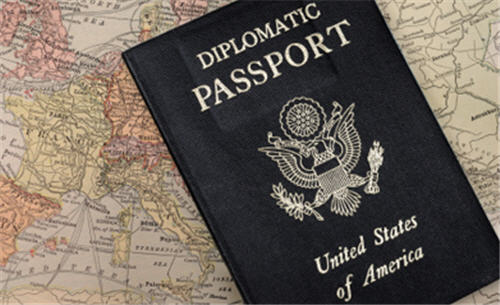
Marshall P. Adair, the author of the book under review here (Lessons from a Diplomatic Life, Lanham, MD: Rowman, Littlefield, 2013) is the scion of one of those splendid Mandarin families—the progeny of John and John Quincy Adams—who have played such a prominent part in the history of the U.S. foreign service. The son of a former U.S. Ambassador (Charles Wallace Adair) and grandson of a gentleman who participated in the drafting of the peace treaty that ended World War I (Hugh Dow Marshall), Marshall P. Adair retired as a Minister-Counselor in the Senior Foreign Service in 2007. Those of us in the Glenn School got to know him at an event that we co-sponsored with the Woodrow Wilson International Center for Scholars.Like most seasoned foreign service officers, Mr. Adair has interesting stories based on a string of exotic postings abroad (in chronological order: Paris, Lubumbashi, Taipei, Hong Kong, Beijing, Rangoon, Chengdu, and Tuzla). And he has worked with a few of the world’s most charismatic and colorful characters, including Aung San Suu Kyi, whom he befriended during his tour in Burma, and uber-diplomat Richard Holbrooke, with whom he worked in Bosnia. Of the lessons he learned in the foreign service, some are fairly mundane: for example, that there always will be tension between the experts (i.e., professional diplomats) and the amateurs (i.e., political appointees). Others are a little more nuanced (for example, that an embassy staffer cannot afford to be completely dependent on his or her official hosts, or the U.S. will have no credibility among opposition elements). Mr. Adair was reminded repeatedly that in recent decades the role of the Department of State in making U.S. foreign policy has been significantly diminished by the Almighty Department of Defense, which has perfected the art of ingesting the massive military-industrial budget, converting it to pork, then channeling it back to carefully selected Congressional districts.
In Lessons from a Diplomatic Life, Mr. Adair demonstrates the many advantages that foreign policy professionals have over the rest of us by virtue of their having a historical context in which to fit contemporary events. Consider the case of Tibet. Adair clearly is drawn to Buddhism, and so he admittedly is fascinated by “exotic and mysterious” Tibet; that is why he welcomed (as “a dream come true”) his posting to Chengdu, which is relatively close by in China. Thanks to that proximity, and a close study of the history of the region, his perspective on Tibet-China relations changed substantially during his time there. He discovered, somewhat to his surprise and chagrin, that there is some truth in China’s claim that prior to its intervention in the 1950s, Tibet, far from being the Shangri-La of romantic myth, was in many ways a feudal theocracy heavily dependent upon slave labor. He learned that Tibet, contrary to myth, was for many hundreds of years not a separate state but rather an integral “part of the Chinese empire.” He came to understand that China has good reason to regard Tibet as a potential threat. Finally, he learned to appreciate a painful irony: compared with the treatment of native Americans in the Western Hemisphere, China’s relationship with Tibetans and Tibetan culture could be considered “a model of respect and restraint.”
The nine chapters (plus preface and coda) of Lessons from a Diplomatic Life are free-standing in many ways, but there are a few themes that run throughout the book. One, already alluded to, is the pathetic status—in terms of budgetary and political clout—of the Department of State compared with the Department of Defense. Another, related to the first insofar as it is a function of draconian budget cuts, is the status of foreign language training in the U.S. foreign service. Americans in general are not good at foreign language acquisition, in part because we haven't had to be multilingual. But wholly inadequate resources exacerbate the problem for our foreign service. Take the case of Zaire: “Because most of us did not speak the indigenous languages or Kiswahili,” Adair writes of the embassy staff, “we were not able to communicate with about 80 percent of the population except in the most rudimentary fashion. Communicating with a country’s elite is insufficient.”
I’ll say. The problem is particularly acute in countries that have indigenous languages beyond the official national languages that are usually a vestige of colonialism. We have a very unimpressive record of training FSOs in indigenous languages, and our performance, according to Adair, is getting worse, not better. “Inadequate financial resources limit the number of teachers and classroom space. A shortage of Foreign Service positions makes it impossible to assign existing Foreign Service officers to more extensive language training.” It’s not a pretty picture.
Mr. Adair has written a most thoughtful account of his career as a third-generation diplomat, one that offers real insight into the changing status of spouses and children accompanying foreign service officers in the field. His anecdotes are informed by his own youthful experience as an embassy brat in Uruguay, Panama, and elsewhere. I was moved by his sensitive treatment of the often uncomfortable role that his wife, Ginger—a Taiwanese-American—was called upon to play during various tours of duty, particularly in Hong Kong, Beijing, and Chengdu. Adair introduces us to his son, Charles, and ruminates about the agonies and ecstasies of living abroad (and changing schools!) as a teenager.
Mr. Adair does an excellent job of demonstrating how the personnel policies of the U.S. Department of State often impacted his career. Rotational assignments, for example, require junior officers to float through the different parts of a U.S. embassy, where they will learn about cultural, political, economic, and consular affairs, in sequence, thereby becoming acquainted with the many dimensions of diplomatic work; he seems to think rotational assignments are a good thing, and I am inclined to agree. Hiring decisions, training opportunities, short-term details, performance evaluation, and the system of bidding on jobs are among the standard operating procedures (SOPs) that Human Relations administers, and that shape a working environment that any federal employee will recognize as profoundly bureaucratic—again, it’s a mixed bag.
Most impressively, Mr. Adair owns up to his own errors, whether of commission or omission. For example, he relates the story of a senior Defense Department official who asks him in Bosnia about lessons learned that could perhaps be applied to Iraq in the aftermath of a war waged in the name of regime change. Based on his experience working with war criminals in Bosnia, Mr. Adair took the opportunity to argue in favor of “cleaning house”; after 2003, he wonders how much that conversation contributed to the forging of a campaign to purge the Iraqi government and military of Baathist party members, a policy that was “probably a huge mistake.” Readers who take public service seriously will sympathize with the author and value his unusually candid reflections on his diplomatic career.
Tuesday, November 5, 2013
A Diplomat's Progress (book review)

Last week the Autumn 2013 class of Glenn Fellows read Samuel Huntington's famous Foreign Affairs article on "The Clash of Civilizations." As an introduction to the not-always-glamorous world of professional diplomacy, I have this week assigned a book called A Diplomat's Progress, written by Henry Precht, a retired foreign service officer. Mr. Precht was born in Savannah, Georgia, and educated at Emory University. He joined the foreign service in 1961 and served in U.S. embassies in Italy, Mauritius, Iran, and Egypt. He was the Department of State’s Desk Officer for Iran during the revolution and hostage crisis when the Shah was overthrown, and he was deputy ambassador in Cairo when Anwar Sadat was assassinated. His nomination by President Jimmy Carter to the post of U.S. ambassador to Mauritania was blocked by Senator Jesse Helms, who blamed him for "losing Iran."
After leaving the foreign service, Mr. Precht served as president of the World Affairs Council in Cleveland, Ohio, where he also taught at Case Western Reserve University. A few years ago, he published A Diplomat’s Progress, a work of fiction consisting of a series of vignettes about a State Department official named Harry Prentice. It is an engaging work that reveals, as one reviewer has put it, the “grittier side of embassy life with a wry sense of humor and a bit of an edge.” To the extent that the work is autobiographical, A Diplomat’s Progress is rather remarkable.
For one thing, the “grittier” aspects of diplomacy are portrayed warts and all. In one of the vignettes, the young Harry Prentice and his wife attend a dinner party at the home of the foreign minister of Mauritius, during which the lecherous host assaults the drunken daughter of the Japanese ambassador. In a vignette set in Egypt, the protagonist must tend to a dead body and a suitcase full of drug money. In “Caviar and Kurds,” set in Iran, Prentice unwittingly leads the Shah’s secret police to an underground freedom fighter named Hassan, whom Prentice discovers hanging from a lamppost the next morning. In this account of embassy life, it seems that no good deed goes unpunished.
Most remarkable as an autobiography—and surely it must be regarded as partly that, in spite of the veneer of fiction—is the book’s unflattering portrait of its protagonist. Throughout A Diplomat’s Progress, Harry Prentice’s diplomatic efforts are undone by his unusual combination of naivete and cynicism. Typically, the reader is given a glimpse of a career diplomat preoccupied, not with the national interest, as one might suppose, but rather, with his own career advancement. At one point, for instance, Prentice seems to have been the unwitting accomplice of a Palestinian terrorist. What does he do about it? He gets up in the middle of the night to compose a somewhat Bardachian “balance sheet of possible courses of action.” There appear to be two:
First, the natural inclination of every Foreign Service Officer: Do nothing. Wait on events and react as necessary and as seems prudent at the time. . . . Alternatively, I could report my suspicions to the police. Playing it straight and admitting wrong might be partially redeeming. The key word was “partially.” The embassy surely would be informed and handle my future as if it had no value. The same with the Israeli authorities. I had to face it: Only I really cared about my future, not any American or Israeli career-building bureaucrat.During his posting to Cairo, Prentice is asked to interview a Sheikh who might have been in a position to influence the extremists holding a number of American hostages in Beirut. Prentice’s efforts fail. “But never mind,” seems to sum up his reaction. “I could only hope that someone—the ambassador or an unknown friend in the department—would make an excellent report of my performance for my file.” The adventure, he concludes, “just might be a turning point—upward—in my career.” On the basis of the evidence provided by the author, the judgment handed down by Prentice’s first wife seems just: He has “a pretty good soul, even though sometime it seems quite lost in the bureaucratic maze.”
Thursday, October 31, 2013
The Quiet American--Book Review (reprise)
I think it’s fair to say that most Americans of my generation were introduced to the English novelist Graham Greene by way of a film, The Third Man, about which Wikipedia—whatever did we do without it?—has this to say:
The Third Man is a 1949 British film noir, directed by Carol Reed and starring Joseph Cotten, Alida Valli, Orson Welles and Trevor Howard. It is particularly remembered for its atmospheric cinematography, performances, and unique musical score. The screenplay was written by novelist Graham Greene, who subsequently published the novella of the same name (which he had originally written as a preparation for the screenplay). Anton Karas wrote and performed the score, which used only the zither; its title music, “The Third Man Theme,” topped the international music charts in 1950. It is often ranked among the greatest films of all time.
One can quibble with the Wikipedia write-up—I am inclined to think that the Vienna sewers are the real star of The Third Man—but there’s no doubt that it is an unforgettable movie, and it was an important literary event to the extent that it led to wider appreciation of the oeuvre of Mr. Greene.
In my case, The Third Man led to The Power and the Glory, which I read in college, and finally, just last year, to The Quiet American. The Quiet American is set in Indochina during the early 1950s, when the Vietnamese were trying mightily to throw off the yoke of French imperialism. They succeeded, finally, in 1954, with the victory of the Viet Minh over the French at Dien Bien Phu. The Viet Minh were aligned with international communism, but there were a number of other movements competing with them for the honor of taking Vietnam back from the French. These groups included the Hoa Haos, a Buddhist movement; the Caodaists, an oddball religious grouping; the Binh Xuyen, an independent militia; and various freelancers and gangsters, such as the character whom Greene calls General Thé. In the context of the Cold War and the United Nations’ “police action” in Korea, there seemed to be a great deal at stake in Indochina during the early 1950s. That’s why there was so much covert action there on the part of foreign governments, including the United States.
There are three main characters in The Quiet American. Thomas Fowler is a worldly British journalist who is separated from his English wife, whose Catholicism would seem to render a legal divorce impossible. Fowler, a cynical and perhaps corrupt man who appears to have “gone bush,” manages to console himself with a beautiful young woman named Phuong (whom he can never marry so long as his wife refuses to file for divorce), and a serious opium habit. The third character, Alden Pyle, is a young American—a Harvard man—whose mission in Viet Nam, we eventually are made to understand, involves terrorist bombings undertaken in the name of freedom and democracy. Pyle and his masters, whoever they may be—probably the CIA—believe that it’s in the best interest of the United States to nurture indigenous liberation movements (so long as they are anti-communist) in all parts of what is now called the Third World.
The adjective “quiet” appears many times in many contexts in Greene’s novel, and while the title of the book may be, as the critic Robert Stone puts it, “a joke” (since Alden Pyle is a “prattling fool"), there may be a kind of rough justice in the fact that Pyle’s indiscretion contributes to his own demise--never mind that Fowler earns an assist along the way. The Englishman's impatience with Pyle looks like pure anti-Americanism alloyed with the perception that innocence of any kind is dangerous in the real world. The lesson of The Quiet American is that idealists have an uncanny knack for wreaking havoc not only on themselves but upon everyone in their general vicinity. Fowler’s problem is that his motives inevitably will be questioned by all who know--and that would include the French provincial police--that Pyle was Fowler's rival for the affections of the same woman: Phuong.
This 21st-century reader of The Quiet American was struck by two things. First, the book makes such a strong and persuasive case against intervention in Vietnam that it seems incredible—more so now even than it did at the time—that the U.S. was willing blithely to wade into the same Vietnamese morass--guns, ideals, and naïveté blazing. The second is that American innocence lingered long aferwards, long enough to inspire our more recent adventure in Iraq, where regime change unfolded in just about the way that Greene would have predicted. It’s hard to believe that any policy could have been better calculated to enhance Iran’s geopolitical fortunes in the Persian Gulf. It occurs to me that The Quiet American may do a better job of arguing against America’s permanent war on terror than other sources I have used in past WAIP seminars.
Finally, I would be remiss if I didn't put in a plug for the 2002 film adaptation of The Quiet American starring the redoubtable Michael Caine.
Tuesday, October 29, 2013
The Guns of August (reprise)

When I was a high-school sophomore, I was assigned on the basis of standardized testing to Advanced Placement social studies. After suffering for a year—I wasn’t mature enough to appreciate primary resources or to contribute to seminar discussions—I bailed out of AP. Unfortunately, that meant that I had missed the standard Plato-to-NATO narrative of Western Civilization that the mainstream kids had taken in tenth grade. As a result, my knowledge of European history remains spotty to this day. What were the Wars of the Roses all about? Who was Albert Dreyfus, anyway? And when, exactly, was the Italian Risorgimento? I have to look these things up every time.
At about the time I was seceding from Western Civ, Barbara Tuchman was putting the finishing touches on The Guns of August, winner of the Pulitzer Prize for 1962. I have imagined ever since that the book might offer a painless way of addressing some of the deficiencies resulting from my misspent youth. The Guns of August has been on my reading list for a very long time.
Now, a half-century later, I have done my duty. All in good time. The Guns of August turns out to be an extraordinarily good read, as President Kennedy recognized while it was sitting atop the best-sellers lists fifty years ago. Kennedy gave copies to members of his cabinet and top military advisors. There are those who say that Tuchman’s analysis of the first month of the Great War influenced Kennedy’s handling of the Cuban Missile Crisis.
It’s hard to know which of the book’s many virtues Kennedy valued the most, but for me it’s Tuchman’s vivid account of how military goals are routinely undermined by the random blundering and miscommunication that inevitably occur in the fog of war.
For example, Tuchman relates the story of the Goeben and Breslau, two of a handful of German warships that happened to be in the Mediterranean in early August, 1914. When Germany attacked France, the Goeben and Breslau got busy shelling French ports in Northern Africa. The British naturally assumed that the German ships would worry about getting trapped in the Mediterranean and so would make a break for the Strait of Gibraltar and the open seas in the event of a British declaration of war against Germany. And so, when Admiral Milne cabled London to report the position of the German ships at 37.44 North, 7:56 East, Prime Minister Winston Churchill telegraphed back: “Very good. Hold her. War imminent.” Unfortunately, Tuchman writes, “when reporting their position, Admiral Milne had neglected to say which direction the Goeben and Breslau were steaming. Churchill naturally assumed they were heading west with further evil intent upon the French.”
In fact, the ships were heading east, and so Admiral Milne was halfway between Malta and Greece when he was informed by the Admiralty that Austria had declared war on England. Milne abruptly gave up the chase to avoid an encounter with any Austrian fleet that might emerge from its base in the Adriatic. “Unfortunately the word [i.e., the cable from Admiralty] was an error by a clerk who released the prearranged code telegram for hostilities with Austria by mistake. . . . One more opportunity was lost.” That meant, to make a long story short, that the Goeben and Breslau were now free to proceed to Constantinople, where the Germans negotiated an alliance with Turkey. From there, the German ships moved into the Black Sea, blocking Russian access to the Mediterranean and provoking them into declaring war on Turkey.
Then there were the French, whose military was smitten with the idea that effective warfare consisted of two things: élan, or the will to conquer, and a policy of relentless offense, even to the point of neglecting national defense. Britain’s Lord Kitchener was among those who recognized the absurdity of such a plan of campaign, but “it had to be accepted because there was no time to make another. . . . The momentum of predetermined plans had,” Tuchman concludes, “scored another victory.”
But none of Tuchman’s stories about the futility of master planning is better than the one about the German plan to attack France by sending an enormous army through the heart of Belgium, which was a neutral country whose security was guaranteed by the five Great Powers, including both France and England (not to mention Germany herself!). The great disadvantage of this plan was that it would draw England into the war on the side of Belgium and France. And yet, the Belgian route had been the Germans’ game plan for many years.
And for the Chief of the German General Staff, General Helmuth von Moltke, the predetermined plan was the only thing that mattered. And so, on August 1, 1914, the night before the start of World War I, Kaiser Wilhelm (pictured above), finally recognizing the grave risks inherent in the default plan of attack against France, announced to General Moltke that he wanted him to turn his armies east, initiating a Russo-German war instead. Moltke, we are told by Tuchman, “refused point-blank.”
Moltke was in no mood for any more of the Kaiser’s meddling with serious military matters, or with meddling of any kind with the fixed arrangements. To turn around the deployment of a million men from west to east at the very moment of departure would have taken a more iron nerve than Moltke disposed of. He saw a vision of the deployment crumbling apart in confusion, supplies here, soldiers there, ammunition lost in the middle, companies without officers, divisions without staffs, and those 11,000 trains, each exquisitely scheduled to click over specified tracks at specified intervals of ten minutes, tangled in a grotesque ruin of the most perfectly planned military movement in history.Tuchman’s book destroys a number of shibboleths along the way, including the idea, prevalent in the early years of the twentieth century, that free trade had made the leading economies so dependent on one another that major, continent-wide wars had become unsustainable, which meant in turn that 20th-century wars were likely to be short and to turn on a small number of decisive battles. No such luck! Finally, The Guns of August excelled at demonstrating that military men stubbornly refused to appreciate the significance of Clausewitz’s dictum that war is the extension of politics by other means; in other words, they underrated the importance of politics.
In addition to influencing actual decision makers in the Kennedy Administration, The Guns of August profoundly affected the academic study of public policy by shaping the thinking of a young scholar named Graham T. Allison, who came up with a model of decision making based on Tuchman’s insights, one that he posited as an alternative to the notion of unitary states basing policy on a perfectly rational calculation of costs and benefits.
Allison’s Organizational Process model of decision making stressed the importance of pre-established routines in limiting policy options to Standard Operating Procedures (SOPs). Organizations, Allison argued, are “blunt instruments,” which is why they cannot be expected to come up with nuanced policies, and why the decisions taken by their leaders are “frequently anticlimactic” and not necessarily rational in any conventional sense. Maybe it could be said that they are about as rational as the curriculum-planning decisions of fifteen-year-olds.
Saturday, October 26, 2013
Autumn 2013 Glenn Fellows Visit Lockheed Martin Space Experience Center
The David Brandt Show is educational in a number of ways. It's not just about space travel. It's about government contracting, too. And it's fun. Shown with their backs to the camera are Daenayia Hudson and Tom McGraw.
Subscribe to:
Posts (Atom)